
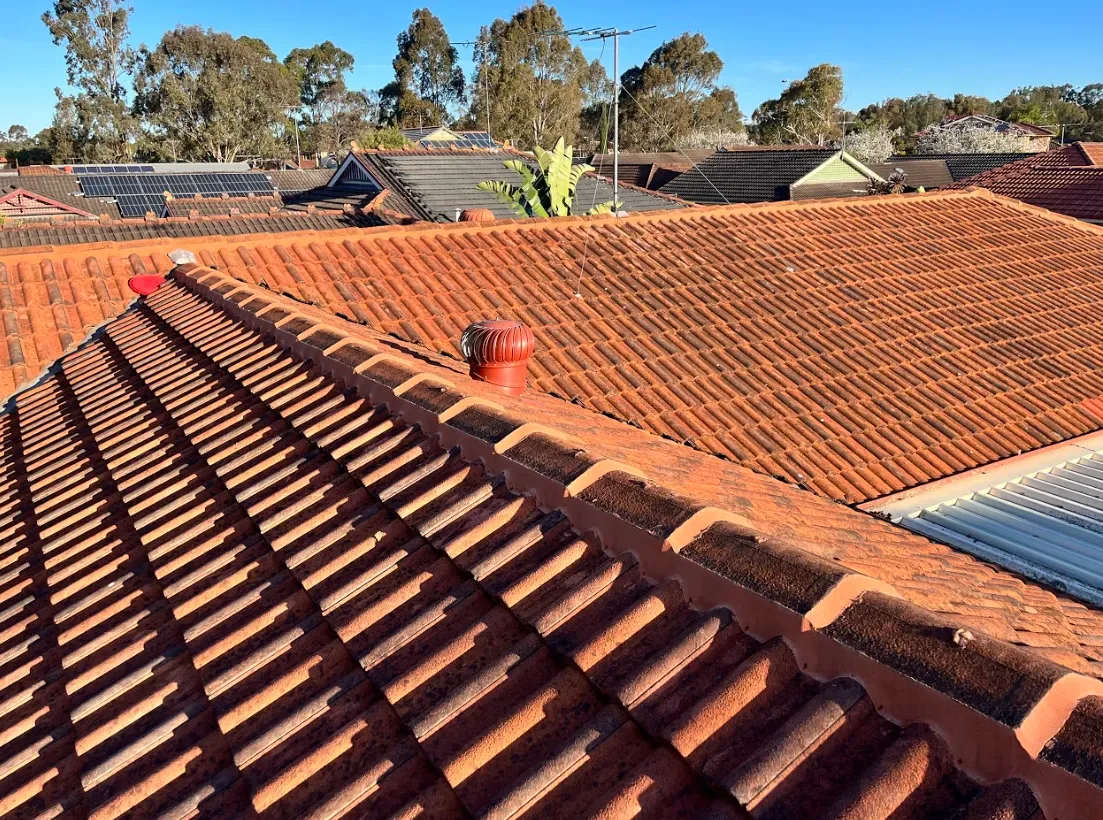
sydney storms rarely give much notice. A hot, still afternoon turns into a southerly buster with hail, and the roof that looked perfectly fine last week starts letting water into the ceiling. Most of the damage we attend after a big storm was not really caused by the storm. It was already sitting there as a lifted tile, a perished screw or a gutter packed with leaves, and the weather simply found it. This checklist covers what to look at before the season starts, what you can safely check yourself, and what needs a licensed roofer.
Is Your Roof Ready for Storm Season?
Get your gutters, tiles and flashings checked now, so small problems are fixed before the first storm.
Why Sydney Roofs Take a Beating in Storm Season
Sydney roofs cop a mix of conditions that few others in the country deal with. Long stretches of harsh UV dry out mortar bedding and make older terracotta brittle. Coastal salt air works away at metal fixings and cut sheet edges. Then summer arrives with sideways rain, hail and gusts strong enough to lift a poorly secured tile clean off the batten.
None of this shows up while the weather is good. A roof can look completely sound from the footpath and still have three or four weak points waiting for the first real downpour. Our team has inspected hundreds of Sydney roofs after storm events, and the pattern almost never changes: the failure point was visible weeks earlier.
The Storm Season Roof Maintenance Checklist

Work through this before the season begins. Everything here can be assessed from ground level with a decent pair of binoculars, or from a stable ladder at the gutter line. Do not climb onto the roof itself.
1. Clear the gutters, valleys and downpipes
Blocked drainage causes more storm damage than wind does. Once a gutter fills, water backs up under the roof edge and into the eaves, fascia and wall cavity. Valleys are worse again, because they carry runoff from two roof planes at once, and a single build up of leaf litter can push water sideways underneath the tiles.
Flush each downpipe with a hose and watch the outlet at ground level. Slow flow points to a blockage further down. Check that stormwater is running away from the house rather than pooling near the footings.
2. Check the tiles and ridge capping
Run your eye along the ridge lines for cracked or crumbling mortar. Bedding and pointing that has gone chalky is behind a large share of the leaks we attend in older Sydney suburbs, because wind driven rain gets in behind the capping and travels along the battens before it ever shows on a ceiling.
📖 People also read about:
Then scan the tile field for slipped, chipped or lifted tiles, paying attention to anywhere a previous trade has walked. Booking storm season roof maintenance while the weather is still dry costs a fraction of an emergency call out, and the work gets done properly instead of as a patch job in the rain.
3. Inspect metal sheeting, screws and flashings
On Colorbond and corrugated roofs, the screws usually fail well before the sheets do. Look for perished washers, screws sitting proud of the sheet, and rust blooming around the fixing points. Each of these lets water in the moment wind pushes rain up under the ribs.
Flashings deserve the same attention. Check every point where the roof meets a wall, chimney, skylight or vent pipe. Lifted edges, open gaps and cracked sealant at these junctions are one of the most common leak sources we find during pre-storm inspections.
4. Look at what sits around and on the roof
Overhanging branches are two problems in one. They drop debris into gutters year round, and in a strong wind they scrape tiles and coatings or come down on the roof entirely. Trim anything sitting within a few metres of the roofline.
📖 People also read about:
Solar panels, air conditioning units, antennas and satellite mounts are worth a look as well. Brackets loosen over time, and penetrations sealed years ago can open up as the roof expands and contracts through summer.
5. Check the ceiling and roof space from inside
Ten minutes in the roof cavity with a torch tells you a great deal. Look for daylight showing through the roof, water staining on the timbers, damp or matted insulation, and signs of possum or rodent activity around the eaves.
Inside the house, walk each room and study the ceilings and cornices for faint brown rings, bubbling paint or fine cracks that were not there last year. Early water marks are easy to walk past.
When to Stop and Call a Licensed Roofer
Anything that involves getting onto the roof belongs to someone trained and equipped for working at height. Falls from roofs cause serious injury in Australia every year, and a damp or mossy tile roof gives almost no grip.
💡 Need help?
We offer professional roof maintenance sydney to help you achieve your goals.
Bring in a professional if you find cracked bedding along the ridges, more than a couple of damaged tiles, rust through on metal sheeting, sagging gutters, or any water staining inside. Every Tomkat tradesperson holds certification in working at heights and elevated work platforms, and inspections are documented with high resolution photos of each defect. That report is also useful later if you need to lodge an insurance claim, since insurers want evidence of the roof’s condition.
Getting the Timing Right
Start roughly six weeks out from when you expect the first serious storms. That leaves room to book a trade, order materials and finish repairs in dry conditions, rather than joining the queue after an event when every roofer in Sydney is booked solid.
For most homes, a proper inspection every one to two years is plenty, along with a follow up check after any major storm. Homes near the coast, sitting under gums, or with a roof past the twenty year mark are better served by an annual look.
Book Your Pre-Storm Roof Check

A storm is a poor time to discover what your roof has been hiding. If anything on this checklist raised a question, have it looked at properly while the weather still allows a calm, unhurried repair. Tomkat Roofing has been keeping Sydney roofs watertight for over twenty years across metal and tile, residential and strata, and we provide free inspections with a full photo report so you know exactly where you stand. Get in touch with our team to book your pre-storm inspection.
Book Your Pre-Storm Roof Check
Our Sydney team will work through every point on this checklist and fix what needs fixing.