

Every year the phone rings hardest on the same two days: the afternoon of the first big storm, and the morning after it. By then the options have narrowed to a tarp and a spot in the queue. The work that actually protects a house happens weeks earlier, when nobody is thinking about the roof at all. If you are reading this in September, your timing is close to perfect.
Is Your Roof Ready for Storm Season?
Get your roof checked before the storms hit, so loose tiles and blocked gutters are fixed in time.
When storm season actually runs in Sydney
The official NSW storm season runs from 1 October to 31 March. Severe thunderstorm activity builds through October, peaks roughly from November to February, and eases off in March. That is the window most Sydney homeowners have in mind when they hear the phrase.
There is a second window that catches people out. East coast lows, the systems that park off the coast and dump rain for two or three days straight, are more common in autumn and winter. They do a different kind of damage. Thunderstorms hit hard and fast with wind and hail. An east coast low finds every small weakness through sheer duration, which is why a roof can survive a spectacular summer storm and then leak in a grey week in June.
Prepare for both and you are covered year round. Prepare for neither and the roof gets tested twice.
Your roof-prep timeline
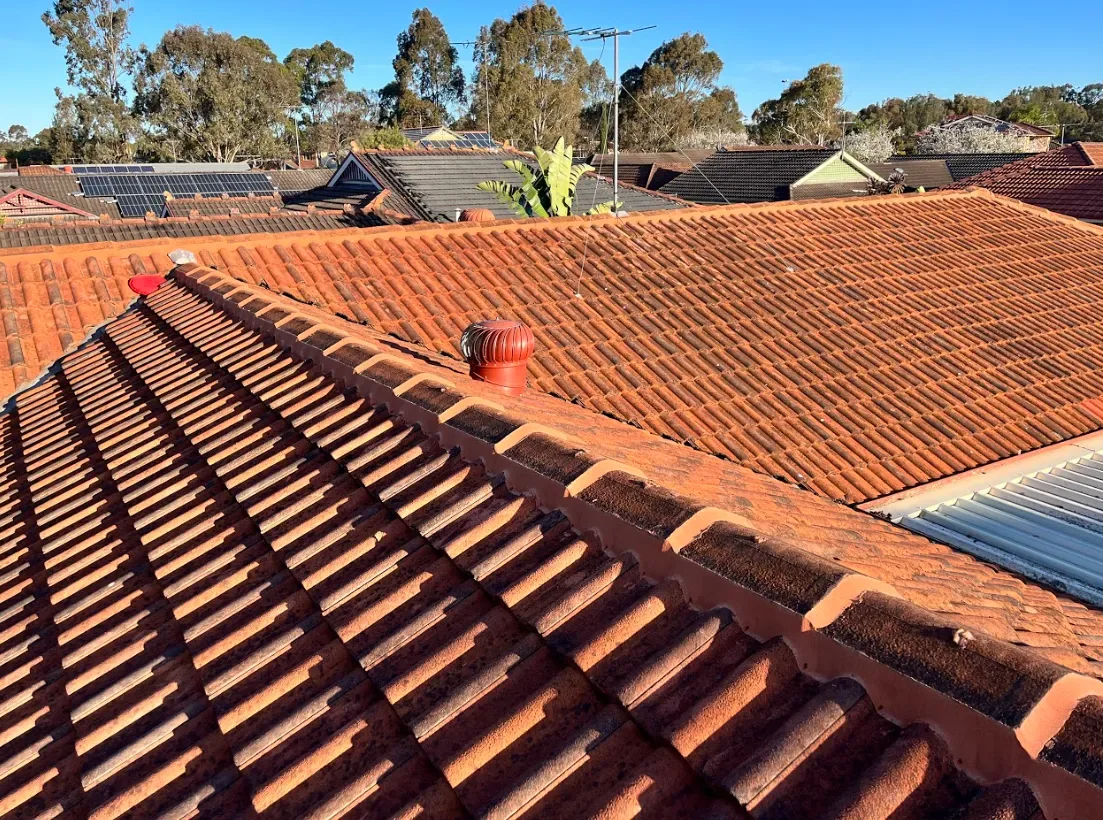
September: book the inspection
Right now is the quiet part of the year for roofers, which makes it the easiest time to get someone on the roof without waiting. A pre-season inspection is looking for the things that fail under pressure: cracked or slipped tiles, perished pointing on ridge caps, lifted or corroded flashing, rusting valleys and loose fixings on metal sheets.
📖 People also read about:
None of these leak on a still day. All of them leak in a southerly. That gap between what a roof looks like and how it performs under wind-driven rain is the reason ground-level confidence is misplaced so often.
October: clear everything that carries water
Gutters and downpipes are the single highest-value job on this list and the one most often left. Water that cannot drain backs up over the fascia and into the eaves, so a blocked gutter produces a leak in a roof that is otherwise fine.
Clear the leaves, flush the gutters with a hose and watch where the water goes. If it pools, sits or overflows anywhere, the downpipe or stormwater line needs attention. Cut back overhanging branches while you are at it, because a limb that scrapes the roof in normal wind becomes a projectile at ninety kilometres an hour.
November to February: check after each event, not each season
Through the peak months the job changes from preparing to monitoring. After any significant storm, do a slow walk around the house from the ground and look up. Fresh tile fragments in the garden beds, granules or debris in the gutters, a ridge cap sitting at a new angle, or a downpipe pulled away from the wall all tell you something moved.
📖 People also read about:
Inside, check ceilings and the tops of walls, especially near skylights, chimneys and external walls. Water often takes days to show, so a ceiling that was clear on Sunday can stain by Wednesday.
March to May: fix what the summer found
Once the thunderstorm season eases, book the repairs you have been noting. This is also your run-up to east coast low weather, so it is the right time to deal with anything involving sustained rain: valleys, box gutters, flashing and any spot that has leaked before.
The pre-storm checklist
Everything here can be done safely from the ground with a pair of binoculars. Do not get on the roof yourself. Falls from height are among the most common serious injuries in Australian homes, and a wet or storm-damaged roof is exactly where they happen.
- Gutters and downpipes clear, with water flowing freely when tested.
- Ridge capping intact, with no visible cracked mortar or tiles sitting out of line.
- No slipped, cracked or missing tiles, particularly along ridges and valleys.
- Flashing sitting flat where the roof meets walls, chimneys and skylights, with no lifting or rust.
- Branches trimmed back at least a metre or two clear of the roofline.
- Loose items secured around the yard, since most storm damage to a roof arrives from something that used to be on the ground.
- Ceiling and cornices checked inside for existing stains you can date, which gives you a reference point later.
Photograph anything that concerns you and note the date. That record is worth having if you end up making an insurance claim.
When a storm does hit

Safety first, and that means staying off the roof entirely until the weather has passed and someone qualified has looked at it. Tiles are loose, surfaces are wet, and the damage you cannot see is the part that gives way.
If water is coming in, contain it, move what you can and photograph everything before you clean up. Then call for a make-safe rather than waiting for a permanent fix, because the two are separate jobs. Our team handles storm damage roof repairs across Sydney on that basis, tarping and stabilising first so the water stops, then quoting the proper repair once the roof can be assessed properly. Insurers generally expect that sequence too, since leaving a known leak to run can weaken a claim.
💡 Need help?
We offer professional storm damage roof repair sydney to help you achieve your goals.
The households that come through storm season best are rarely the ones with new roofs. They are the ones who booked in September.
Want your roof checked before the season starts? Get in touch with Tomkat Roofing or call 1300 866 528 for a free pre-season inspection, complete with photos of anything we find and a fixed price on the fixes.
Frequently Asked Questions
When is storm season in Sydney?
The official NSW storm season runs from 1 October to 31 March, with severe thunderstorm activity peaking between November and February. East coast lows are more common through autumn and winter.
When should I book a pre-storm roof inspection?
September is the ideal window. Roofers are less stretched than they are in October, and it leaves time to complete repairs before the first serious storms arrive.
What is the most important storm preparation for a roof?
Clearing gutters and downpipes. Blocked drainage causes water to back up into the eaves and roof cavity, which produces leaks in roofs that have nothing structurally wrong with them.
Should I get on my roof to check it before storm season?
No. Carry out your checks from the ground with binoculars and leave anything requiring roof access to a licensed roofer with the right safety equipment.
What should I do straight after a storm?
Stay off the roof, contain any water coming in, photograph the damage before cleaning up, and arrange a make-safe. The permanent repair can be quoted once the roof has been properly assessed.
Book Your Pre-Storm Roof Check
Beat the rush. Our Sydney team will inspect and repair your roof before storm season arrives.