
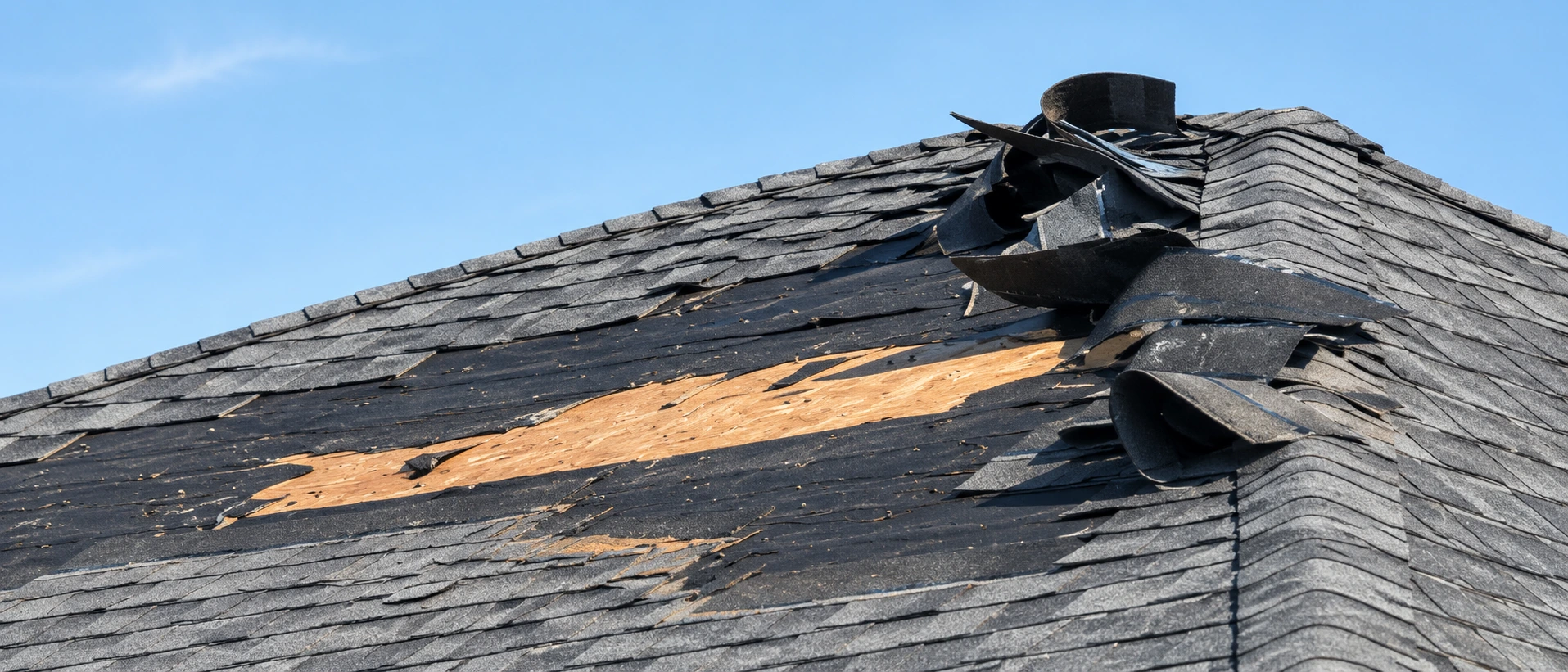
A storm tracks across Sydney overnight, and by morning there are tiles on the lawn and a damp patch creeping across the bedroom ceiling. You lodge a claim, and the assessor starts asking questions that sound almost identical but are not: was this wind damage, or storm damage? The wording matters far more than most homeowners expect, because it decides which part of your policy responds, how the repair is scoped, and how much of the bill lands back on you.
Storm Damage to Your Roof?
Get a licensed roofer to inspect and record the damage before you lodge your insurance claim.
Why insurers separate the two at all
Most Australian home building policies fold weather events into one broad storm definition, with wind sitting inside it alongside hail, lightning and heavy rain. Some policies pull wind out and give it its own conditions, its own excess, or its own limits on what is covered. Two neighbours on the same street, hit by the same front, can end up with very different outcomes purely because of how their policies are worded.
What the assessor is really doing is working backwards from the damage to the cause. Wind damage tends to be mechanical: something was lifted, torn, peeled or thrown. Storm damage is broader and often includes water getting in where it should not. In our experience across Sydney claims, the distinction usually turns on where the damage sits on the roof and what pattern it follows, not on how bad the weather felt from inside the house.
What wind damage looks like on a Sydney roof
Wind rarely damages a roof evenly. It finds edges and lifts them.
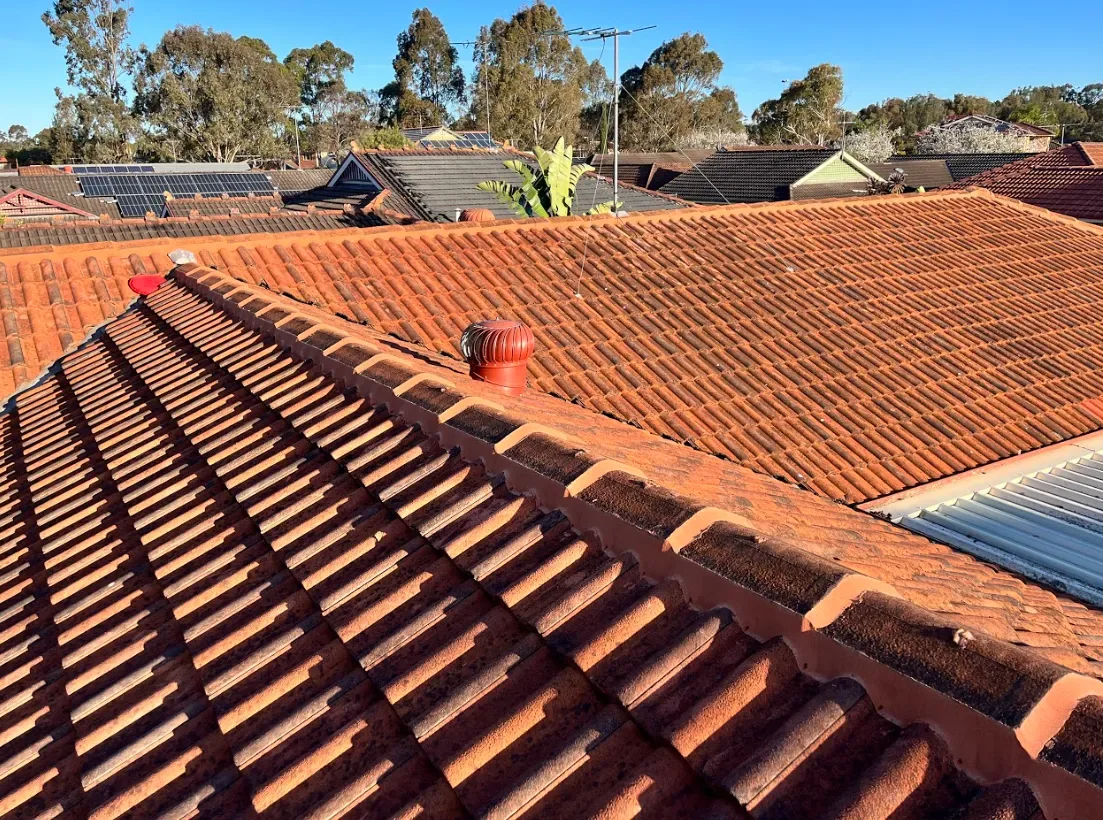
Tile roofs
On tile, wind damage shows up along the windward edge, at the ridge line, and around the verge. Look for tiles that have slipped out of alignment rather than shattered, missing or cracked ridge caps, and pointing that has broken away in sections. Sarking torn under a lifted tile is a strong indicator, because that only happens when something pulled upwards with force.
Metal and Colorbond roofs
On metal, wind damage tends to appear as sheets lifted at the fasteners, screws that have backed out or torn through, flashing peeled away from a wall junction, and capping that has rippled or lifted at one end. Gutters pulled loose from their brackets belong here too. We have attended plenty of Sydney jobs where the roof looked untouched from the driveway and the actual damage was a two metre run of lifted barge capping visible only from the ridge.
What counts as storm damage
Storm damage covers the wider event: hail impact, wind-driven rain forced past flashings and valleys, water ingress through a skylight junction, debris strikes from branches, and damage from an overwhelmed gutter or downpipe. It is the category that most roof claims after a Sydney southerly actually fall under.
📖 People also read about:
The overlap causes the confusion. Wind lifts a tile, then rain enters through the gap it left. That is one event with two mechanisms, and how it gets described on the claim form changes how it is assessed. If you are unsure what you are looking at, a licensed roofer providing storm damage roof repair in Sydney can document the sequence properly, which is usually what an insurer wants to see before approving a scope of works.
The issue that sinks most claims
Almost every declined roof claim we see comes back to the same finding: the insurer decided the damage was pre-existing. Rusted sheeting, perished pointing, deteriorated flashing and old ponding stains are all treated as maintenance, not as a weather event. A roof already in poor condition gives an assessor a straightforward reason to say the storm was not the cause.
This is why condition and cause get assessed together. Twenty years of attending Sydney roofs after storms has taught us that the claims which move fastest are the ones where the roof was clearly sound beforehand and the damage is clearly new. Torn sarking, bright unweathered breaks in tile, fresh scoring on metal, and debris still sitting on the roof all point to a recent event.
What your insurer needs to see
Assessors work from evidence, not descriptions. Give them this:
- Dated photographs from multiple angles, taken from the ground and from inside the roof cavity if it is safe. Wide shots establish context; close-ups establish detail.
- Interior damage recorded separately: ceiling stains, wet insulation, water marks on cornices, with dates.
- The weather event identified: the date, the time, and the Bureau of Meteorology warning or record for your suburb.
- A written roof condition report from a licensed roofer describing what failed and why.
- Every invoice kept, including temporary works. An invoice line reading "temporary tarp installed over wind-lifted rear slope, western elevation" carries far more weight than "roof repair".
- Evidence of prior maintenance: past inspection reports, receipts, or repair records showing the roof was being looked after.
Make emergency repairs to stop further water entry, because insurers expect you to limit the damage, but photograph everything before you cover it. Hold off on permanent repairs until the assessment is done.
When to call a roofer before your insurer

If the damage is not obvious from the ground, a proper inspection first is worth the wait. Lodging a claim for three broken tiles, then discovering torn sarking and lifted capping a fortnight later, means reopening a claim that has already been scoped, and reopened claims are far harder to move.
📖 People also read about:
Our team documents Sydney roofs with photographic reports written for assessors, covering the damage, the likely cause and the repair scope, so the claim is supported from the start rather than argued afterwards.
💡 Need help?
We offer professional storm damage roof repair sydney to help you achieve your goals.
If a storm has just been through your suburb, get the roof looked at before the next one arrives. Contact Tomkat Roofing for an inspection and a documented report you can lodge with confidence.
Book a Roof Damage Inspection
Our Sydney team will inspect your roof, photograph the damage and make it watertight again.