
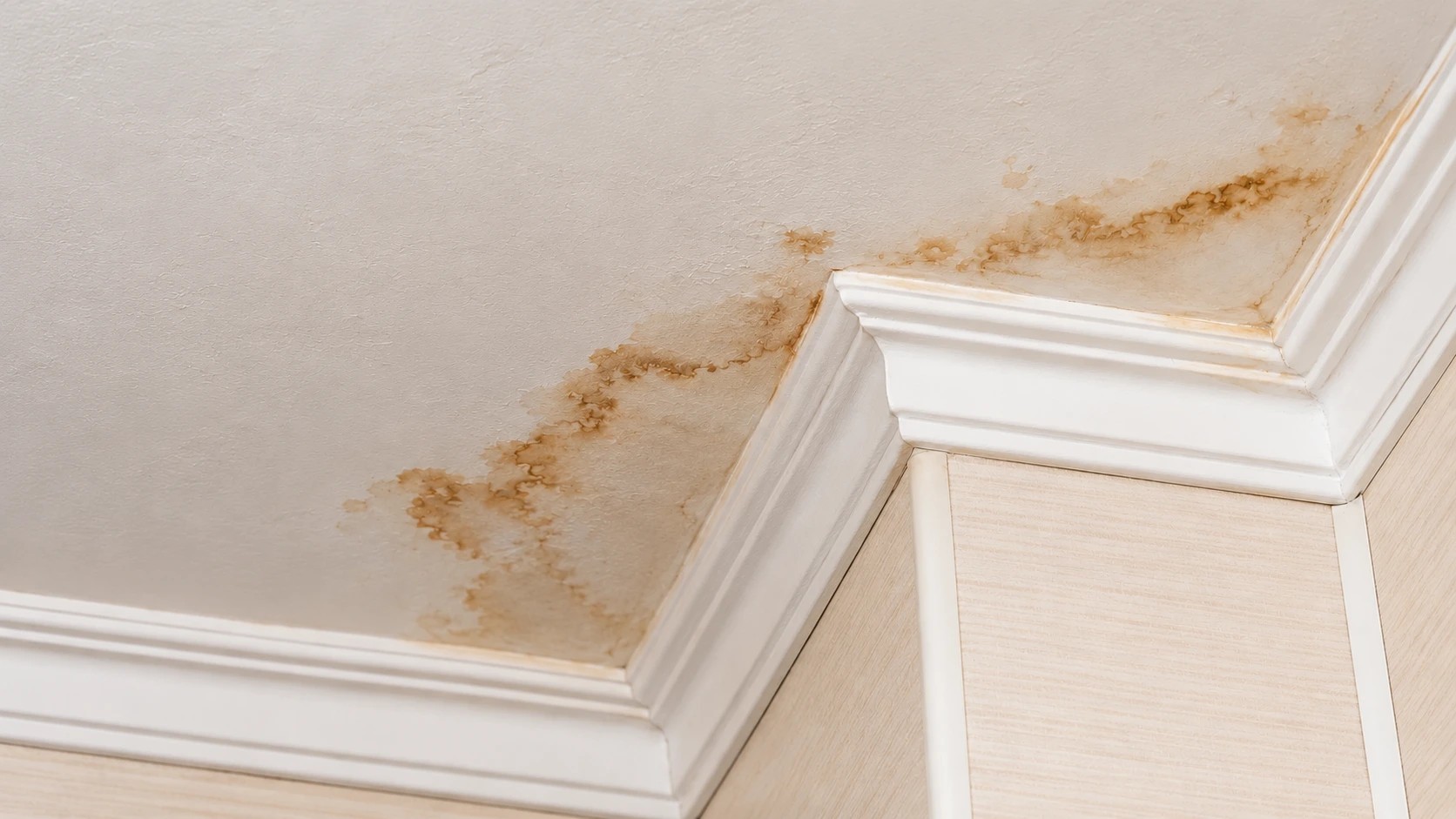
A ceiling that has started to droop, bow or balloon after heavy rain is not a cosmetic problem you can leave until the weekend. That shape means water has already come through your roof, soaked the insulation and plasterboard above, and is now sitting there as dead weight. Plasterboard holds a surprising amount of water before it gives way, and when it goes, it comes down in one piece. What follows is what to do in the first hour, what to avoid, and how a roofer works out where the water actually got in.
Ceiling Sagging After Rain?
Call us now. We will find where the water is getting in and stop it before your ceiling gives way.
What a sagging or bulging ceiling is telling you
There is a difference worth understanding between the two shapes.
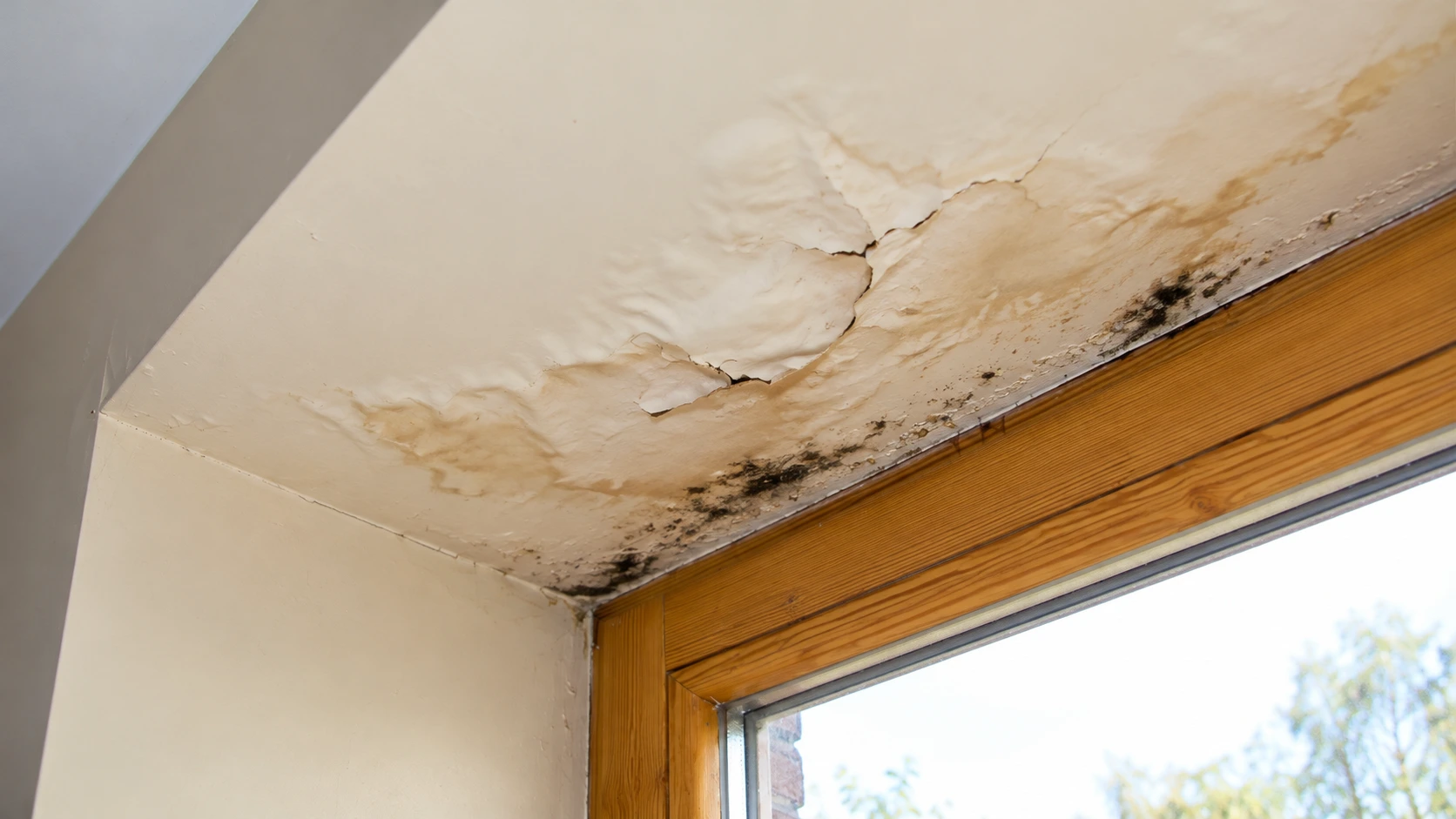
A bulge is usually a pocket of water sitting in a low point, held back by paint and the plasterboard sheet. It can appear within hours of a storm and it will keep growing while water keeps arriving. A sag across a wider area generally means saturation has been going on longer, the insulation batts above are waterlogged, and the screws or nails holding the sheet to the ceiling battens are starting to pull through.
Wet insulation is the part most people underestimate. A few litres soaking into batts adds tens of kilograms across a small span, and ceiling sheeting was never designed to carry that load. On the callouts our crews attend after Sydney storms, the ceilings that come down are almost always the ones where someone waited two or three days to see whether it would dry out on its own.
What to do in the first hour
Work through these in order.
- Clear the room underneath. Move people, pets, furniture and anything valuable out from beneath the affected area. Do not stand directly under it while you assess.
- Cut the power to that part of the house. Water travels along ceiling battens and finds downlights, wiring and light fittings before it finds a way out. Switch off the affected circuit at the switchboard. If you can see water pooling around a downlight or running near a fitting, treat the whole area as live until an electrician says otherwise.
- Contain what you can. Buckets, a tarp on the floor, towels along the skirting.
- Consider a controlled release. If the bulge is small, contained and you can reach it safely with a bucket in position, one small hole at the lowest point lets it drain slowly instead of tearing open. Stand to the side, not underneath. If the sag covers a large span, is cracking, or the sheet has already separated from the cornice, leave it completely alone and get out of the room.
- Photograph everything before you clean up. Wide shots, close shots, and a short video of water actually coming through if the rain is still going. Insurers ask for this and it is far easier to capture now than to recreate later.
What not to do
Do not push a bulge back into shape. Do not paint over a stain to see if it returns. Do not climb onto a wet roof to look for the hole, which is how a manageable repair bill turns into an ambulance call. And do not switch the lights back on until the cavity has been checked and dried.
Why the leak is rarely directly above the bulge
This is the part that catches homeowners out. Water entering at a cracked ridge cap or a rusted valley does not fall straight down. It runs along the top of the sarking, follows a rafter, tracks across a batten and drops at the first low point it reaches, which can be several metres from where it got in.
📖 People also read about:
That is why patching the ceiling without finding the entry point simply resets the clock until the next downpour. A proper diagnosis means getting into the roof cavity and reading the water trail backwards, checking the roof surface in the areas that trail points to, and testing under controlled water where the fault is not obvious. If you need leaking roof repairs in Sydney done once rather than three times, this stage is where the money is well spent. Our managing director, Tom Stephens, has spent more than twenty years tracing these paths on Sydney homes, and the entry point is almost never where the customer expects it to be.
The faults we find most often on Sydney roofs
- Cracked, slipped or chipped tiles, often from someone walking the roof to install an aerial or clean gutters
- Failed pointing and bedding on ridge caps, which is one of the most common tile-roof leaks in homes past the twenty-year mark
- Rusted or undersized roof valleys, where two slopes concentrate a huge volume of water into one channel
- Flashing failures at chimneys, skylights, vent penetrations and wall abutments
- Blocked gutters and box gutters backing water up under the eaves and into the cavity
- Perished sarking, or no sarking at all, which is common in older Sydney homes and removes the last line of defence
Fixing the roof first, then the ceiling
The sequence matters. Stop the water, dry the cavity properly, remove and replace the soaked insulation, then repair or replace the plasterboard. Re-sheeting a ceiling over damp timber and wet batts leads to mould and a second repair within months.
📖 People also read about:
On insurance, sudden storm damage is treated very differently from gradual deterioration, so the dated photos you took and a written report from a licensed roofer will do more for your claim than anything else. Keep both.
Get it looked at before the next storm
If your ceiling is sagging, bulging or stained after rain, the water is still getting in somewhere and the next downpour will make it worse. Tomkat Roofing is fully licensed and insured, works across all Sydney suburbs, and was named an Australian Small Business Champion in 2024 and 2025.
💡 Need help?
We offer professional roof repair casula to help you achieve your goals.
Contact our team for a no-obligation inspection and a clear, itemised quote, or call 1300 866 528 if water is coming through right now.

FAQ
Is a bulging ceiling going to collapse?
It can. Plasterboard absorbs water and gets heavier until the fixings pull through, and it usually fails all at once rather than gradually. Large bulges, cracking sounds, or sheeting separating from the cornice are signs to clear the room immediately.
Should I poke a hole in a sagging ceiling?
Only for a small, contained bulge where you can position a bucket and stand to the side. One small hole at the lowest point drains it in a controlled way. For a large sag, leave it and get a professional in.
Why is my ceiling still stained after the rain stopped?
The stain dries but the roof fault does not repair itself. Water has tracked through the cavity and left mineral staining behind. The entry point above is still open and will let water in during the next storm.
Does home insurance cover a sagging ceiling from a roof leak?
Sudden damage from a storm event is generally treated differently from damage caused by wear, poor maintenance or a long-standing leak. Dated photos and a written inspection report from a licensed roofer give your claim the best chance.
How quickly should I get someone out?
Same day if the ceiling is bulging, water is near electrics, or the sag is growing. A stain that appeared after rain and is not spreading can wait for a scheduled inspection, but not for months.
Stop the Leak Before the Next Storm
Our Sydney team will trace the leak to its source and fix your roof, so the ceiling can be repaired.