
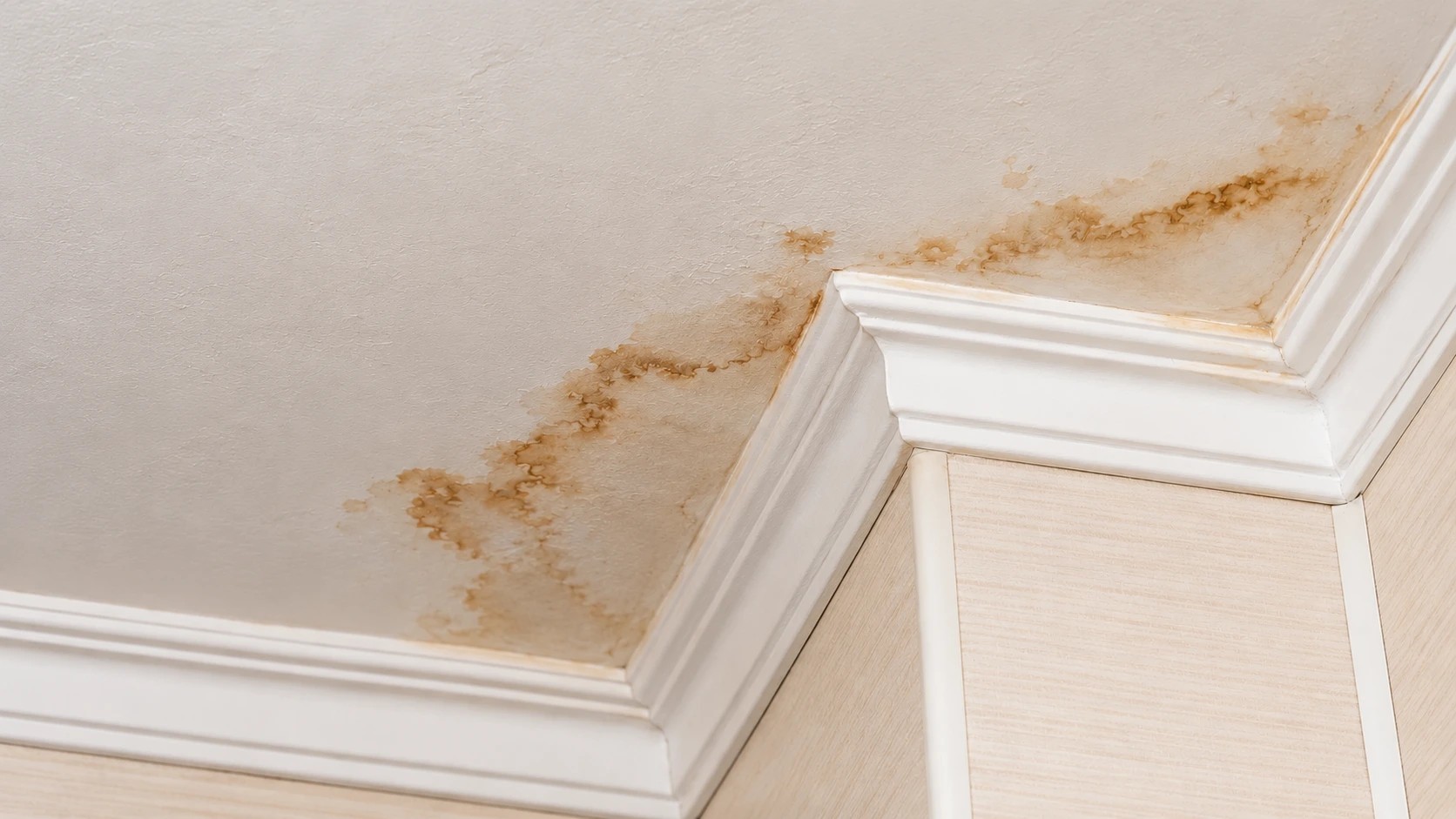
A brown ring on the ceiling after a wet weekend is easy to talk yourself out of. The rain stops, the mark dries out, and the plan becomes a coat of paint sometime later. The trouble is that the stain is not the damage. It is the receipt for water that has already travelled through your roof, along your framing and into the plasterboard. Across Sydney we see the same pattern most weeks: a small mark that sat quietly through two seasons, then a ceiling that needs replacing after one east coast low.
Water Stains on Your Ceiling?
A stain after rain usually means water is getting in. Get our Sydney roofers to find out why.
What the stain is actually telling you
Water rarely falls straight down. It enters at a cracked tile or a lifted flashing, runs along a rafter or the underside of the sarking, then drops at the first low point it finds. That is why the mark on your ceiling is often nowhere near the entry point on the roof, sometimes several metres away. Chasing the stain instead of the water path is the most common reason a “fixed” leak comes back.
The colour and edge of the mark give you real clues:
- A yellow-brown ring with a clean edge usually means water arrived, soaked in and stopped. That points to a leak which only opens up under certain conditions.
- A dark patch with no defined edge, still spreading suggests water is still getting in.
- A stain that only grows with southerly weather tends to be wind-driven rain pushing under capping or through a gap that sits closed on a still day.
What causes ceiling water stains after rain
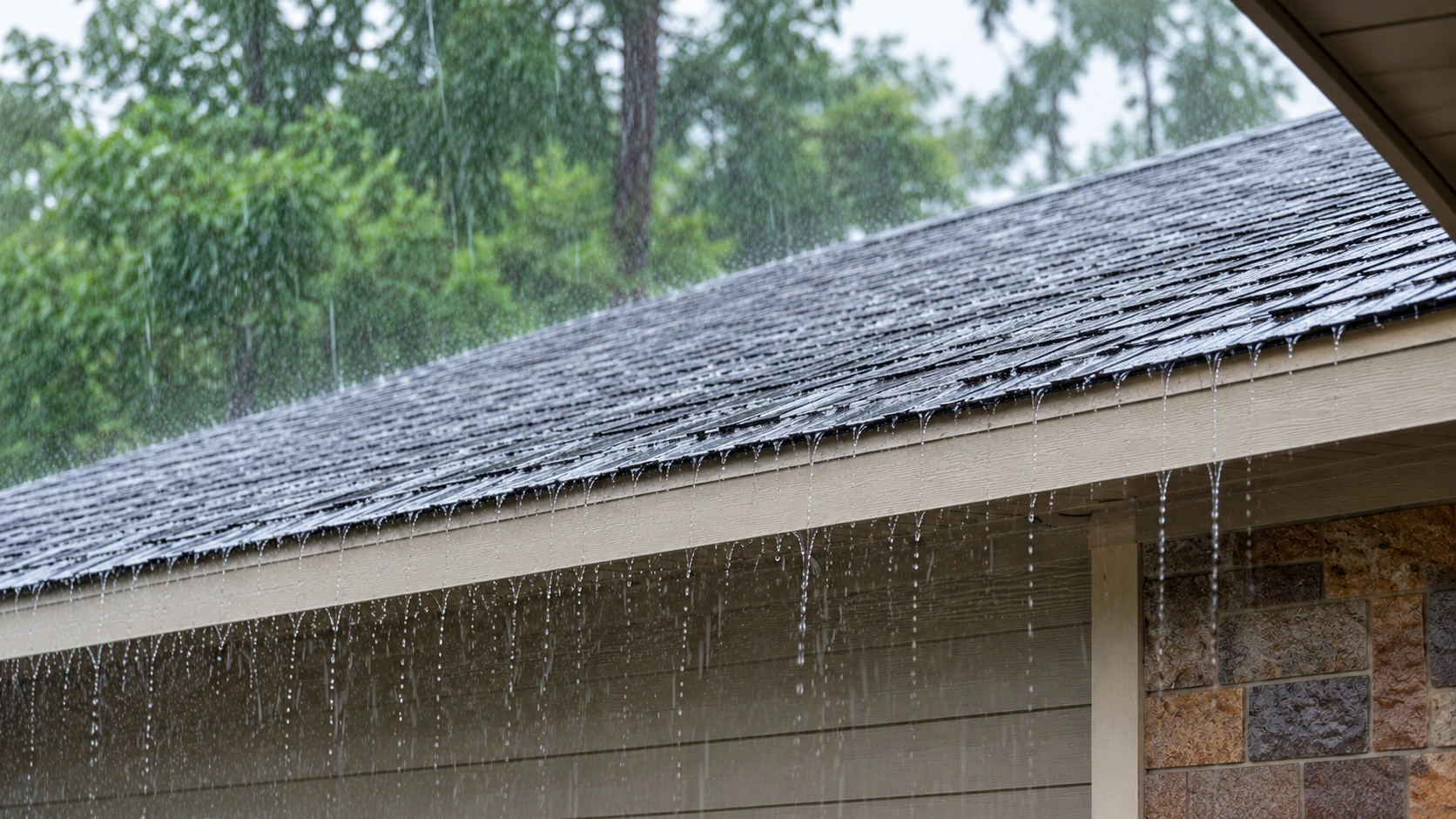
On Sydney homes the causes come back to a short list, and roof age matters less than you would think. A ten-year-old roof with one failed flashing leaks just as readily as a forty-year-old one.
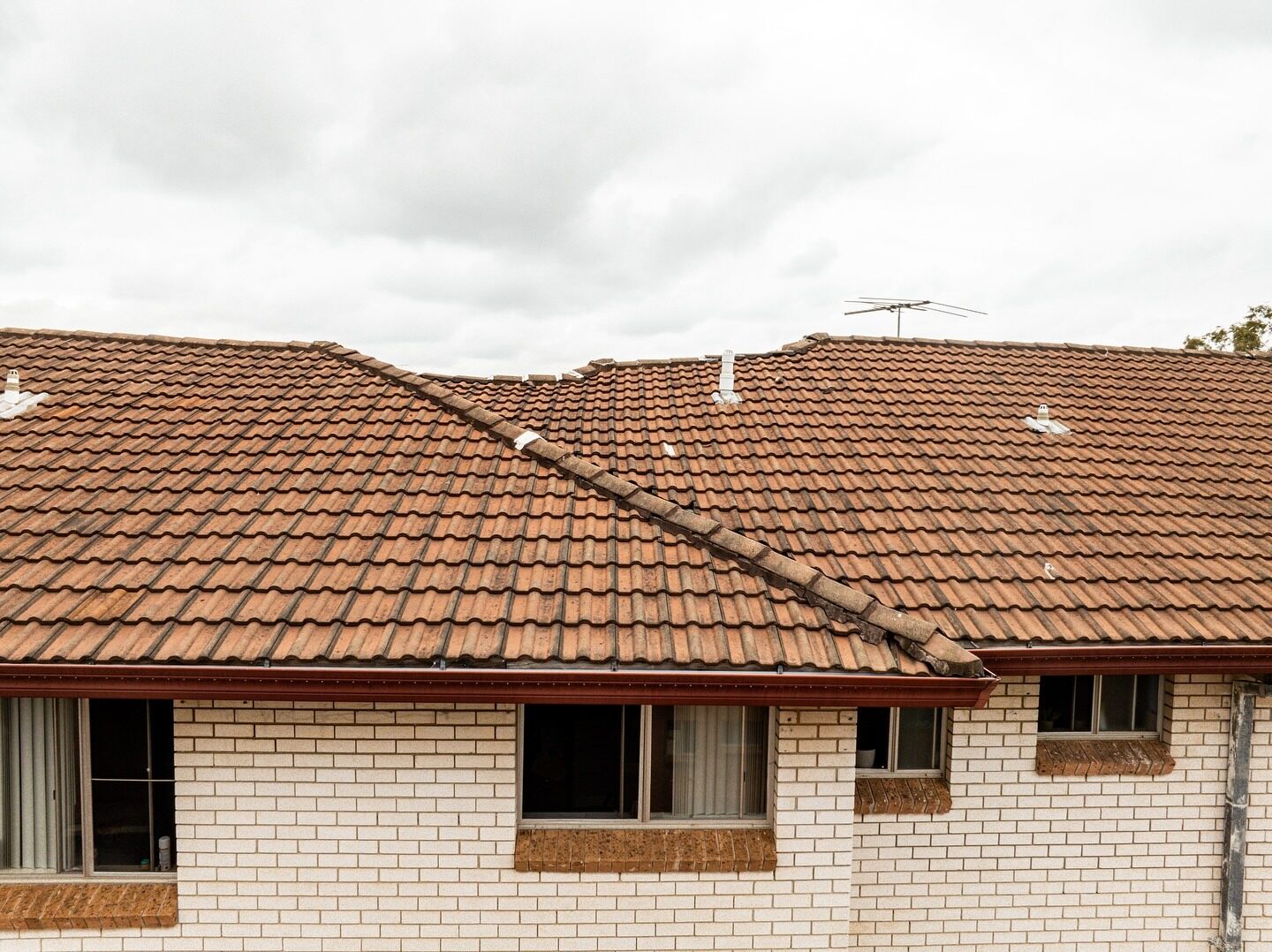
- Cracked or slipped tiles. Foot traffic from an aerial installer or a solar crew is a frequent culprit, and the damage often sits out of sight from the ground.
- Perished pointing and bedding. Ridge caps rely on flexible pointing. Long dry spells shrink and crack the mortar, then the next downpour runs straight into the cavity.
- Failed flashing. Around chimneys, skylights, vents and anywhere a roof meets a wall, flashing does the hardest work on the roof. Sealant dries out, metal lifts, and the gap only opens under rain.
- Blocked or overflowing gutters. Water backs up over the fascia and into the eaves rather than draining away, which typically shows as a stain near an external wall.
- Rusted valleys and perished sarking. Older Sydney homes often have no sarking at all, so there is no second line of defence once water is past the tiles.
Most of what we attend turns out to be a single failure point rather than a roof at the end of its life, which is why leaking roof repairs usually cost far less than owners brace themselves for when the problem is caught early.
Roof leak, or something else?
Not every ceiling stain is a roofing job. Condensation in a poorly ventilated roof cavity leaves soft, diffuse marks, often across a whole ceiling rather than in one spot. A leaking pipe, a shower waterproofing failure or a blocked air conditioning drain tray will also stain a ceiling, and those marks sit directly under the fixture.
The timing test is the quickest one you can run yourself. If the mark only changes after rain, the roof, gutters or stormwater are in the frame. If it keeps growing through a dry week, look at the pipework or the air conditioner above it. When a home has both, and plenty do, the leak needs to be properly diagnosed before anyone starts cutting plasterboard.
How serious is the mould risk?
This is the part that turns a cosmetic annoyance into a health question. A roof cavity is dark, still and poorly ventilated, which is close to ideal for mould once moisture is added. Damp plasterboard and wet insulation can begin growing mould within a couple of days, well before anything is visible from the room below.
📖 People also read about:
Insulation is what homeowners forget. Wet batts stay wet for weeks, hold moisture against the ceiling and lose most of their thermal value at the same time. On the inspections we carry out, the ceiling stain is often the smallest part of the problem once we lift a few tiles and look at the batts and framing above it. A musty smell in a room with no obvious mark on the wall is worth taking seriously.
When to worry, and what to do now
Treat it as urgent if the ceiling is sagging, bubbling or soft to touch, if water is actively dripping, if the stain keeps spreading between rain events, or if the mark is anywhere near a light fitting, downlight or ceiling fan. Water and electrical fittings in the same cavity is not something to sleep on.
While you wait for an inspection, move furniture clear, put a container under any drip, and photograph the stain with the date so you have a record for insurance or your strata committee. Do not paint over it. Stain-blocking paint hides the evidence and the mark bleeds back through as soon as the leak runs again, by which time the framing has had another few months of moisture.
📖 People also read about:
A proper diagnosis means getting on the roof and into the cavity, not guessing from the lounge room floor. Photo reporting matters here too, because you should be able to see the failure point yourself before you approve any work.
💡 Need help?
We offer professional roof repair casula to help you achieve your goals.
If you have a ceiling stain you are unsure about, get in touch with Tomkat Roofing or call 1300 866 528 for a free inspection and a fixed price proposal, with before and after photos so you know exactly what was wrong and what was done about it.
Don't Wait for the Stain to Spread
Book a roof inspection and get the leak behind the stain repaired before it damages your ceiling.