Call Us Today!
Home โบ Blog โบ Metal Roof Insulation
A metal roof handles Sydney weather well, but with the wrong insulation it can turn a home into an oven in summer and an icebox come winter. This guide walks through the insulation types that suit Sydney’s climate, what each one costs, how it’s installed under metal sheeting, and how to choose the right system for your roof and budget.
Licensed Sydney roof plumbers ยท 15+ years on the tools ยท Updated 19 May 2026 ยท 7 min read
Target roof R-value (NCC Climate Zone 5)
Typical energy-bill saving
Radiant heat reflected by foil
Usual payback period
We’ll assess your roof, check ventilation and condensation risk, and recommend a compliant insulation system.
Going from a hot, noisy metal roof to a comfortable, quiet one comes down to the insulation sitting between the sheets and your ceiling. This guide covers what we find on Sydney roofs, the materials that work in this climate, how each is installed, what it costs, and the mistakes that quietly waste money.
Most weeks we’re up in roof cavities across the Inner West, the Hills and the Northern Beaches, and the pattern is familiar. Older metal roofs with no insulation at all, or a single layer of foil pressed straight against the underside of the sheets with no air gap. In winter that traps moisture and you get condensation dripping onto the ceiling. In summer the same cavity bakes, and the heat radiates straight down into the rooms below.
On roughly half the metal roofs we inspect there’s no vapour control, or the ventilation gap is blocked. Left alone, that moisture rots battens, stains ceilings and shortens the life of the roof.
Sydney pushes a roof hard. Summer days nudge 40ยฐC, storms dump heavy rain, and nights still cool right down. Metal conducts heat fast, so without a proper insulation layer the roof passes that swing straight into your living space. The right system does four jobs at once.
Keeps summer heat out and winter warmth in, so rooms stay steady instead of tracking the weather outside.
A vapour barrier and air gap stop warm indoor air meeting cold metal and dripping back down as moisture.
Cuts the drum of rain and hail on the sheets, one of the most common complaints we hear about metal roofs.
A well-insulated roof can trim cooling and heating costs by 20-45%, often paying for itself in under three years.
There’s no single best product. The right choice depends on your roof pitch, the cavity space you have, and whether we’re insulating during a re-sheet or retrofitting an existing roof. These are the systems we fit most often in Sydney.
A reliable all-rounder that sits neatly between the battens.
Best for: Standard pitched metal roofs with room in the cavity.
A radiant barrier that bounces heat before it enters the cavity.
Best for: Hot, west-facing roofs that cop the afternoon sun.
High performance where space is tight.
Best for: Low-pitch roofs and retrofits with shallow cavities.
Seals the roof as a continuous layer.
Best for: Cathedral and skillion ceilings where batts won’t sit well.
A blanket built specifically for Australian metal roofs.
Best for: New builds and full re-sheets.
Good insulation is as much about the method as the material. This is the sequence we follow on a typical job.
Check for rust, damaged battens and leaks, fix what needs fixing, and confirm there’s a 25mm air gap to work with.
Sydney sits in NCC Climate Zone 5. We target around R3.5 to R5.0 and size the system against the National Construction Code and the relevant standards.
Fit the barrier on the warm side of the insulation and tape the joints so moisture can’t track through.
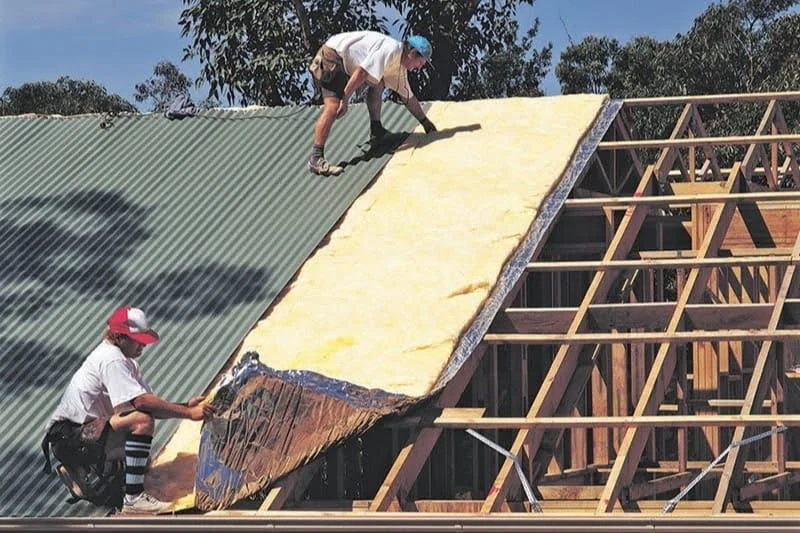
Lay it snug with no compression, work from the eaves up to the ridge, and keep that air gap clear.
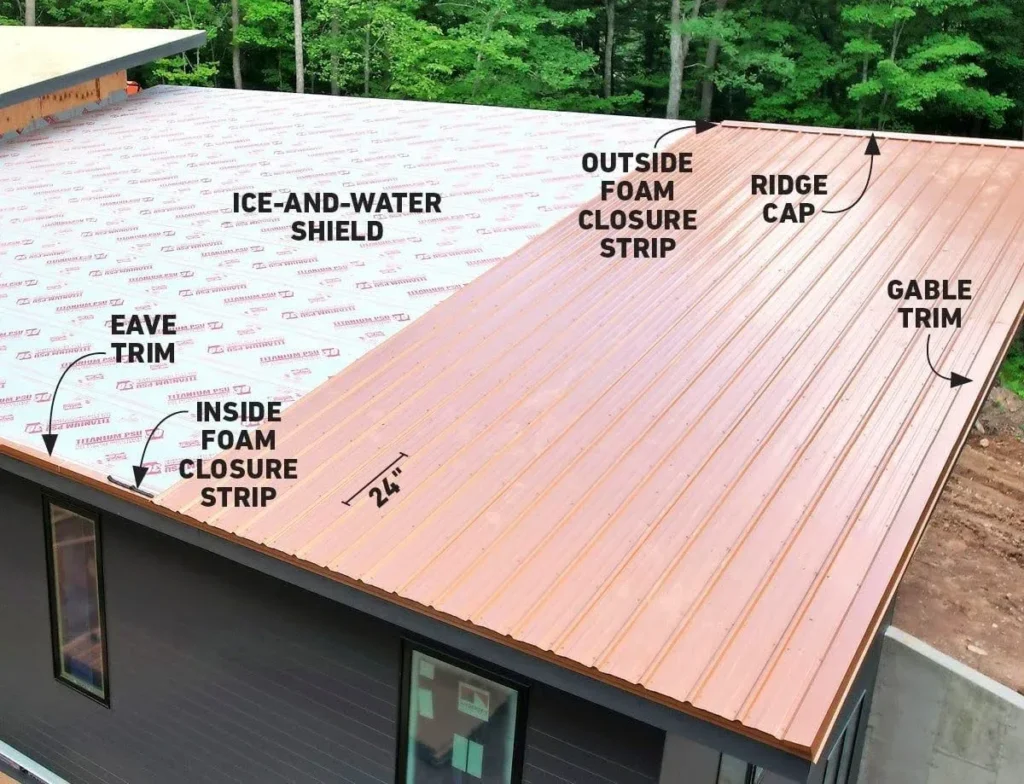
Detail around vents, pipes and skylights, and finish the eaves and ridge so the system breathes the way it should and stays free of expansion noise.
Most underperforming roofs we’re called back to come down to one of these.
That’s usually a sign the existing setup has one of these problems. A professional metal roof repair and inspection will pinpoint it before it spreads.
If your roof is more than 15 years old and due for replacement, insulating during the re-sheet is the smart move โ it’s far cheaper than retrofitting later and you get a clean, continuous system. If the sheets are still sound, a ceiling-cavity upgrade on its own may be enough.
Before we recommend anything, we measure the existing insulation depth, check for moisture, and test the ventilation. That tells us whether you need a full roof-blanket system or a more targeted top-up.
Pricing depends on the system, your roof size and access, but here’s the working range for Sydney homes.
It’s worth checking current Sydney council and Australian Government rebates before you commit โ energy-efficiency incentives can take a chunk off the upfront cost.
Tomkat Roofing is licensed and insured across NSW, and our roof plumbers and installers are fully qualified. We size insulation to your roof’s wind classification, assess condensation risk properly, and install to compliant methods โ then back it with a written quote, full specs and a workmanship warranty.
Call 1300 866 528
ย Terms of Useย |ย Privacy Policy
ยฉ 2025 Tomkat Roofing. All Rights Reserved.