
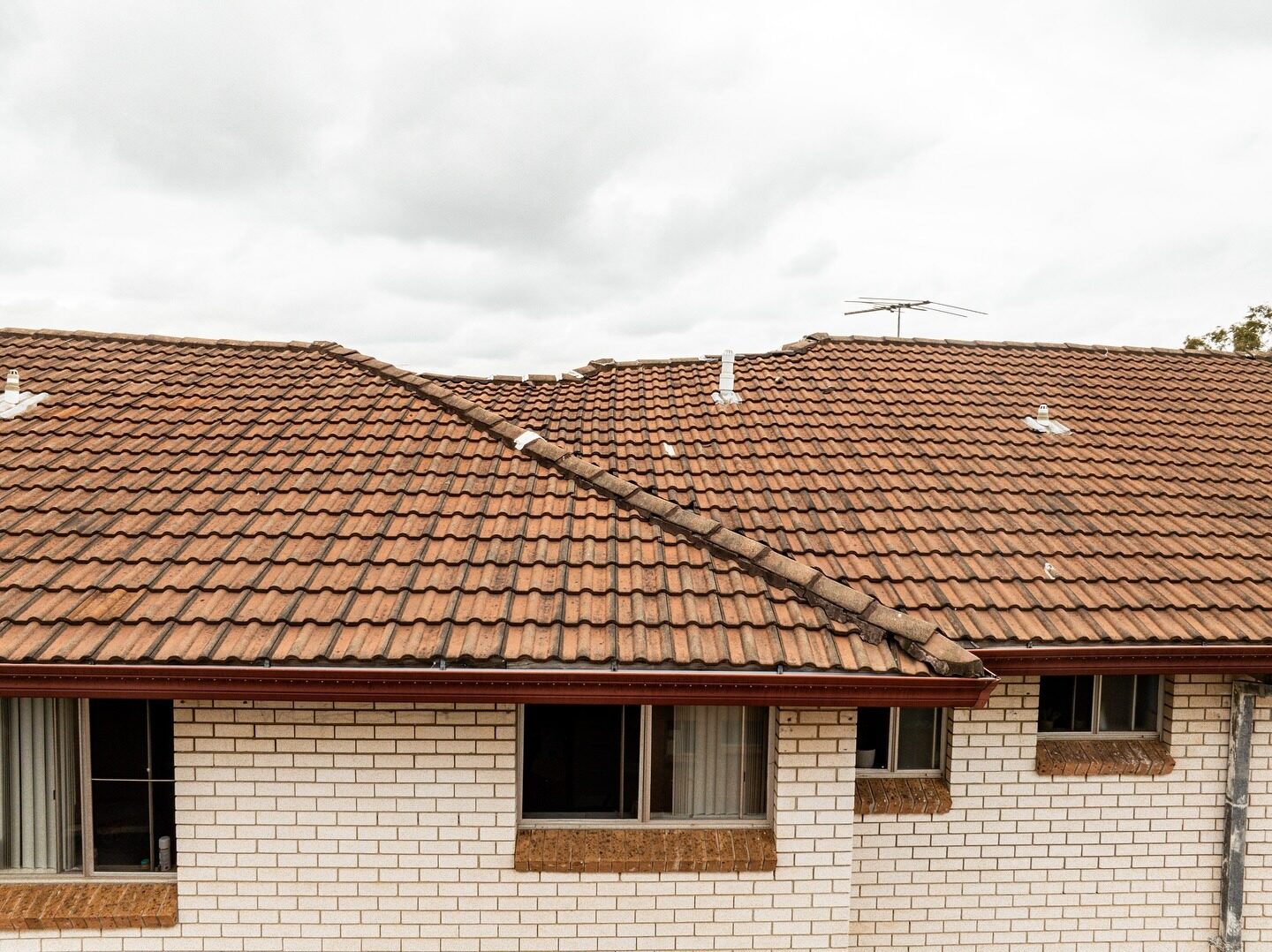
It’s one of the most confusing things a Sydney homeowner can experience. Everything looks fine on a clear day. Then a heavy downpour arrives and suddenly you’re chasing drips with a bucket across the ceiling.
Only Leaks When It Pours?
Intermittent leaks are easy to ignore and easy to misdiagnose. Our Sydney team traces the real source so it is fixed once, not patched again and again.
If your roof leaks only during heavy rain, it can be tempting to write it off as a minor inconvenience or assume it will sort itself out. But that thinking can be costly. Intermittent leaks are still leaks, and Sydney’s storm season has a way of turning small problems into serious ones very quickly.
Here’s what’s likely causing it and what you should do about it.
Why Does a Roof Leak Only During Heavy Rain?
In light drizzle, water moves off your roof at a manageable pace. During a heavy downpour, the volume and intensity increases dramatically, and any small weakness in your roofing system becomes a point of entry.
This is why the problem seems to appear out of nowhere. The roof isn’t fine on sunny days because there’s nothing testing it. Heavy rain is the stress test that exposes what’s been quietly deteriorating underneath, and in our experience, the source is rarely where the water shows up inside.
Common Causes of Roof Leaks in Heavy Rain
1. Blocked or Overflowing Gutters
When gutters fill with leaves and debris, water has nowhere to go during heavy rainfall. It backs up and pushes under the roof edge or into the fascia boards. This is one of the most frequent issues we come across on Sydney homes, particularly properties near established trees, and it’s often the last thing homeowners think to check. In many cases, timely gutter repairs in Sydney can resolve the overflow at its source before water starts damaging the fascia or internal ceilings.
2. Cracked or Deteriorated Flashing
Flashing is the metal sheeting that seals joins around chimneys, skylights, vents, and roof edges. Over time it lifts, corrodes, or pulls away from the surface. In light rain, water runs harmlessly past. In a downpour, it finds those gaps quickly. Flashing failures are easy to miss from the ground but show up clearly during a proper roof inspection. Our guide on how to repair leaking roof flashing walks through the common failure points in more detail.
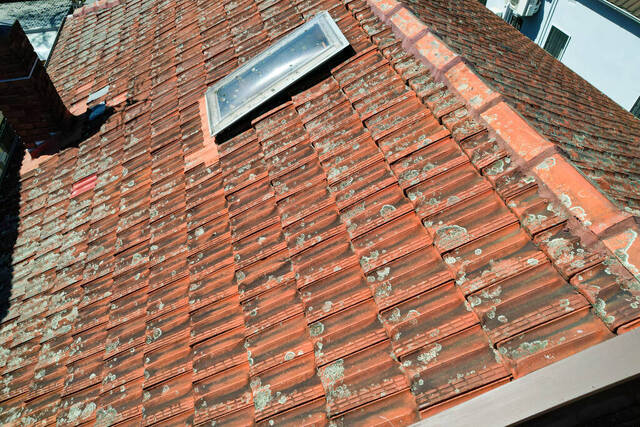
3. Cracked or Slipped Roof Tiles
A single cracked tile or one that has shifted slightly may cause no issues under normal conditions. But when heavy rain hits at pace or at an angle, water gets in through those compromised spots. This is particularly common in Sydney homes with older terracotta or concrete tile roofing where the bedding mortar has started to break down. If you’re wondering whether a cracked roof tile can cause a leak, the short answer is yes, especially during heavy rainfall when water is forced sideways under the tile.
4. Degraded Sealant Around Vents and Valleys
Sealant around pipe boots, vents, and roof valleys breaks down with age and Sydney’s heat. When heavy rain arrives, the volume of water overwhelms the weakened seal. It’s a small failure point that creates a disproportionately large problem inside.
5. Flat or Low-Pitch Roofing Issues
Flat and low-pitch roofs rely more heavily on waterproofing membranes and drainage systems. When these age or get partially blocked, water ingress during high-volume rain events becomes almost inevitable. Even a modest blockage in a box gutter can cause serious overflow across a flat surface.
📖 People also read about:
6. Damaged or Missing Sarking
Sarking is the moisture barrier installed beneath your tiles or metal sheets. If it’s torn, incorrectly lapped, or absent in sections, heavy rain can push moisture straight through to your ceiling. We regularly find sarking issues in older Sydney homes that have had previous repair work done without replacing it properly. In many cases, repairing ripped roof sarking is a necessary step before the tiles can be safely relaid.
What Are the Risks of Leaving It?
Water damage is cumulative. Each time it rains, moisture penetrates further into insulation, ceiling plaster, and structural timbers, and what starts as a small stain can quietly become mould, timber rot, and a growing repair bill.
If you’ve spotted water marks on your ceiling after a recent storm, that’s your signal to act now rather than wait for the next one. Our leaking roof repair service is built around locating the real source of the problem, not just treating where the water appears inside.
What To Do Right Now

While you wait for a professional to assess the roof, here are a few steps to minimise damage:
1. Place containers under active drips and protect flooring with towels or drop sheets
2. Clear obvious gutter blockages if it is safe to do so from ground level
3. Avoid climbing onto the roof during or after rain
These are temporary measures only. The source of the leak needs to be properly identified and repaired to stop it recurring.
📖 People also read about:
Prevention Is Far Cheaper Than Repairs
Consistent maintenance is the most effective way to avoid roof leaks only during heavy rain. An annual inspection can catch cracked tiles, failing flashing, blocked gutters, and degraded sealant well before storm season puts them to the test.
With over 20 years working on Sydney roofs across all types and ages of homes, our team at Tomkat Roofing knows exactly where to look and what to look for. Every inspection includes a full photo report so you can see the condition of your roof clearly, not just take our word for it.
💡 Need help?
We offer professional roof repair casula to help you achieve your goals.
Get Your Roof Sorted Before the Next Storm
Don’t wait for the damage to worsen. Contact Tomkat Roofing today for a free inspection and no-obligation quote. We service all areas across Greater Sydney and can typically get you booked in quickly.
Call us on 1300 866 528 or submit an enquiry online. Let’s get it fixed before the next downpour arrives.
Frequently Asked Questions
Why does my roof only leak during heavy rain?
Light rain often runs off before it can get through a small gap, but heavy, wind-driven rain pools and pushes water sideways under tiles, flashing and valleys. That is when a hidden weak point finally lets water in.
What are the most common causes?
Cracked or slipped tiles, failed flashing around chimneys and vents, blocked or overflowing gutters, and worn valleys are the usual causes in Sydney homes.
Is it safe to leave a leak that only happens sometimes?
No. Even occasional water entry rots timber, stains ceilings and can lead to mould and wiring problems. The repair is almost always cheaper than the damage it prevents.
Can you find a leak that is not obvious?
Yes. Experienced roofers trace leaks back to the entry point rather than just treating the stain, checking flashing, tiles, valleys and gutters to find where water is actually getting in.
How do I stop it happening again?
Fixing the root cause, keeping gutters clear, and having the roof checked every couple of years, especially after big storms, keeps small problems from turning into leaks.
Fix It Before the Next Storm
A leak that only shows in heavy rain still rots timber and ruins ceilings over time. Our team finds it and sorts it properly.