
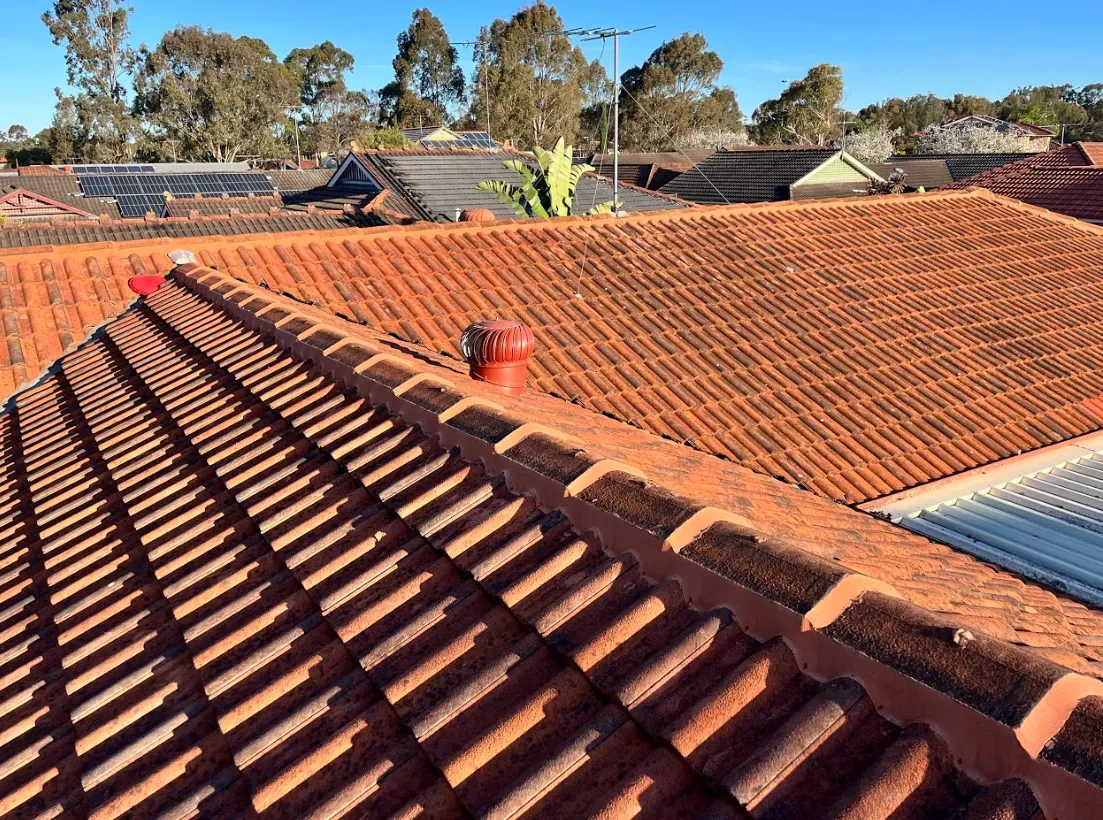
Cracked ridge cap mortar means the bedding holding your roof’s apex tiles in place has started to fail, and if left alone it lets water seep beneath the tiles, soaks your roof timbers, and eventually shows up as damp patches on your ceilings. For Sydney homeowners, this is one of the most common roofing issues you’ll face, thanks to our mix of harsh UV, salty coastal air, and sudden heavy downpours. The good news is that professional repointing can fix the problem before it turns into a much bigger repair bill.
Spotted Cracked Ridge Capping?
The sooner failed mortar is repointed, the less chance water reaches your timbers and ceilings. Our Sydney roofers pinpoint the problem fast.
What Are Ridge Cap Mortar Cracks?
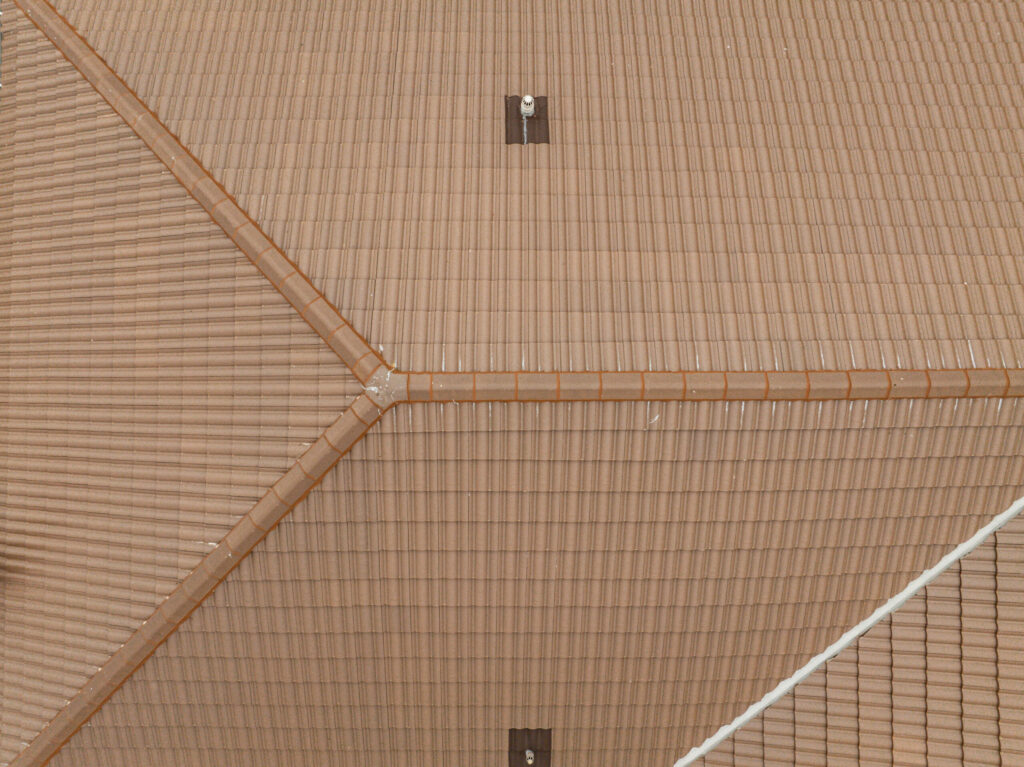
Ridge caps are the curved tiles that sit along the peak of your roof, where two slopes meet. They’re held down with a bed of mortar, traditionally a sand-and-cement mix, that seals the join and stops wind, water, and pests from getting underneath.
Over time, that mortar bed dries out, shrinks, and develops hairline cracks. Eventually those cracks widen, chunks fall away, and you start seeing white powdery dust on your gutters or bits of grey rubble on the lawn after a windy night.
Why Sydney Roofs Are Particularly Prone
A few local factors speed up mortar failure across NSW homes:
1. Temperature swings. Sydney summers can push roof surfaces past 60°C, then drop sharply with an evening southerly. That expansion and contraction stresses the mortar every single day.
2. Salt-laden air. Homes within 20km of the coast, which covers most of the metro area, deal with airborne salt that slowly eats into traditional mortar.
3. East coast lows. Sudden, heavy rain events force water hard against ridge joints. Any weakness gets exploited fast.
4. Age. Most cement-bedded ridge caps in Sydney start showing cracks somewhere between 10 and 15 years after they were laid.
If your home was built in the 80s or 90s and the roof hasn’t been touched since, you’re well overdue for a proper look.
Signs You Need to Pay Attention To
Beyond the obvious cracks visible from the ground, watch for:
✓ Mortar fragments in your gutters or downpipes
✓ Damp patches or water stains on upstairs ceilings, especially after rain
✓ Visible gaps between the ridge caps and the tiles below
✓ Tiles that look slightly out of alignment along the peak
✓ Birds nesting under the ridge line, a sure sign there’s a gap they can squeeze through
A quick inspection from the yard with binoculars often tells you enough. If anything looks suspect, it’s worth booking a professional check.
📖 People also read about:
Not sure whether your ridge caps need attention? Tomkat Roofing offers free roof inspections across Sydney and gives you an honest assessment with photos, so you know exactly what’s going on up there.
What Happens If You Ignore It
Mortar cracks rarely stay small. Once water gets in, the damage cascades:
1. Sarking deteriorates. The waterproof membrane beneath your tiles starts breaking down.
2. Battens rot. The timber strips your tiles are nailed to soften and lose grip.
3. Insulation soaks through. Wet insulation loses its R-value and grows mould.
4. Ceiling damage appears. Plaster sags, paint bubbles, and stains spread.
5. Structural timbers suffer. In severe cases, rafters and trusses are affected, leading to repairs that run into five figures.
📖 People also read about:
What starts as a $1,500 repointing job can balloon into a $15,000 partial roof replacement if it’s left for a few wet seasons.
The Fix: Professional Repointing
Repointing is the process of removing the failed mortar bed and replacing it with a flexible pointing compound, usually applied over a fresh cement bedding underneath.
A proper repointing job looks like this:
✓ Inspection and clean. All loose mortar is chipped away, ridge caps are checked for damage, and any cracked caps are replaced.
✓ Re-bedding (if needed). Where the underlying cement bed has failed, a new bed is laid using a sand-cement mix.
✓ Flexible pointing. A polymer-based compound, available in colours to match your tiles, is applied over the bedding. This stays flexible for years and moves with the roof.
💡 Need help?
We offer professional roof repair casula to help you achieve your goals.
✓ Finishing. Joints are smoothed, excess material is cleaned off, and the gutters are cleared of debris.
Done properly, flexible pointing typically lasts 15 to 20 years, far longer than the old cement-only method.
Why DIY Usually Goes Wrong
Repointing looks straightforward on YouTube, but in practice it’s risky work. Walking on tiles cracks them. Mixing the wrong ratio creates a bed that fails within a couple of years. Old mortar that isn’t fully removed leaves weak points where water gets in. And working at height without proper harness setup is genuinely dangerous.
A reputable Sydney roofer carries the right insurance, knows how to walk a tiled roof without breaking caps, and uses pointing products that suit our climate.
Want it done right the first time? Book a no-obligation quote with Tomkat Roofing today and get your ridge caps sealed properly before the next big storm rolls through.
Frequently Asked Questions
How much does ridge cap repointing cost in Sydney?
For a standard single-storey home, expect anywhere from $1,200 to $3,500 depending on the length of ridge line, access difficulty, and how many caps need replacing. Multi-storey or steep-pitch homes sit at the higher end.
How long does the job take?
Most homes are completed in one day, sometimes two if extensive re-bedding is required or weather interrupts the work.
Can I just patch the cracks myself with caulk?
Short answer: no. Caulk won’t bond properly with weathered mortar and will peel away within months. You’ll have spent money for no real protection.
How often should ridge caps be checked?
Every 5 years is sensible for a Sydney roof. After major storms or hail, it’s worth a quick look as well.
Will repointing fix existing leaks?
If the leak is coming from failed ridge mortar, yes. If water is entering elsewhere, like broken tiles, blocked valleys, or a damaged flashing, those need separate attention. A proper inspection identifies the real source before any work begins.
Get Your Ridge Caps Sorted Properly
From repointing to full re-bedding, our team gives you a straight assessment and a fixed-price quote, with no guesswork.