

This isn’t a checklist for roofers. It’s a guide for anyone trying to stay one step ahead of expensive repairs, insurance headaches, and full replacements. If you own a home, these are the early signs worth paying attention to.
Roof Showing Its Age?
Our licensed Sydney team spots the signs your roof needs restoration before problems grow.
Early Warning Signs (Often Ignored Until It’s Too Late)
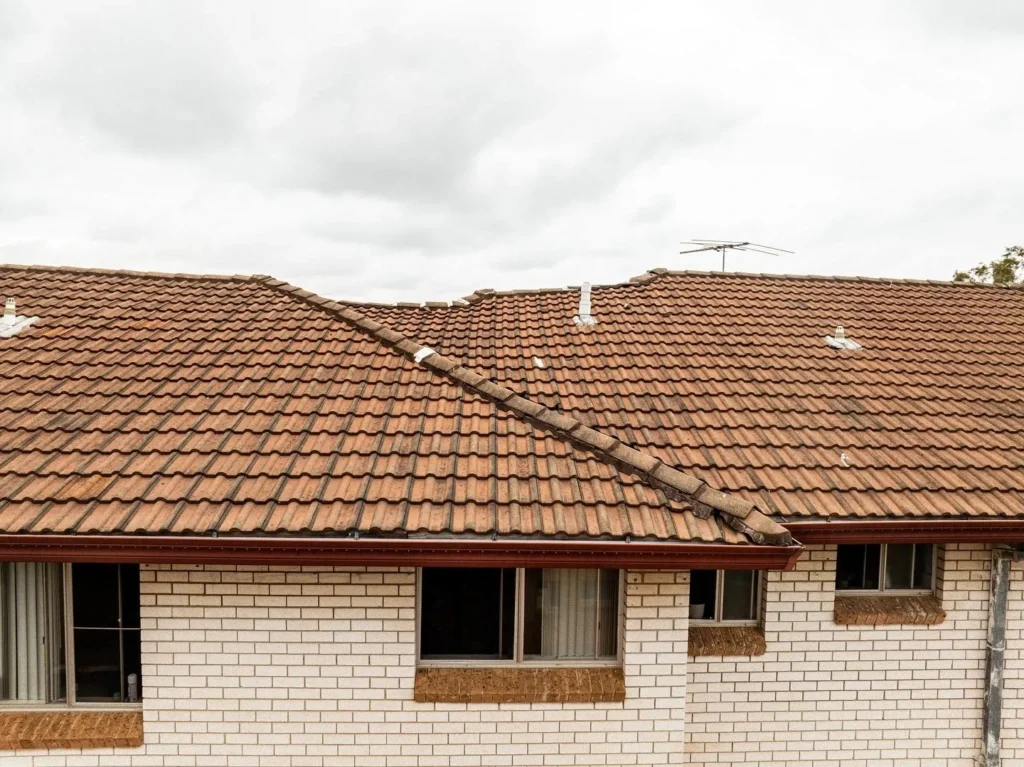
Subtle Staining or Fading in Isolated Areas
Discolouration on a roof—especially uneven fading or patchy staining—can mean surface coating failure from UV exposure or moisture ingress. It’s often the first sign that protective layers are starting to break down.
These problems usually show up on north- or west-facing slopes in sun-heavy suburbs like Penrith or Blacktown.
What looks like a cosmetic issue could be a warning that your roof is losing its first line of defence.
Paint Bubbling Under Eaves or Gables
This is an easy one to overlook. Bubbling or peeling paint near the eaves often signals moisture buildup from within the roof cavity, caused by a leak, poor ventilation, or trapped condensation.
It doesn’t mean your ceiling’s about to collapse, but it does mean water is working its way in quietly—and weakening the structure while it does.
Mid-Level Concerns (Where Restoration Pays Off Most)
New Sounds During Rain or Heat
If your roof suddenly sounds louder in a storm or creaks more in the afternoon heat, something has changed. Fasteners may have loosened. Panels may be shifting. Or the insulation might be compromised.
These changes don’t fix themselves. They usually indicate early movement in roofing components, and small movement becomes big damage if left too long.
Moss or Lichen Between Tiles or Sheeting
A bit of moss might seem harmless, but when it’s wedged in tile gaps or between sheets, it traps moisture and degrades the surface underneath. That trapped water can freeze, expand, or fester, creating a long-term leak risk.
📖 People also read about:
Clearing moss without fixing what allowed it to grow is like brushing over rust. It’ll be back—and next time, worse.
Mid-Level Concerns (Where Restoration Pays Off Most)
Loose or Moved Flashing (Not Just Tiles)
Flashing is what keeps water out where the roof meets walls, vents, or skylights. When it shifts even slightly, water sneaks in—and because it’s not always visible from the ground, many homeowners miss it until internal stains appear.
The mistake most people make? Grabbing a tube of silicone and sealing the edges. But that doesn’t address what caused the movement—usually ageing fasteners, expanding metal, or improper installation. Restoration corrects it properly, before it leads to rot.
Granules or Flakes in Your Gutters
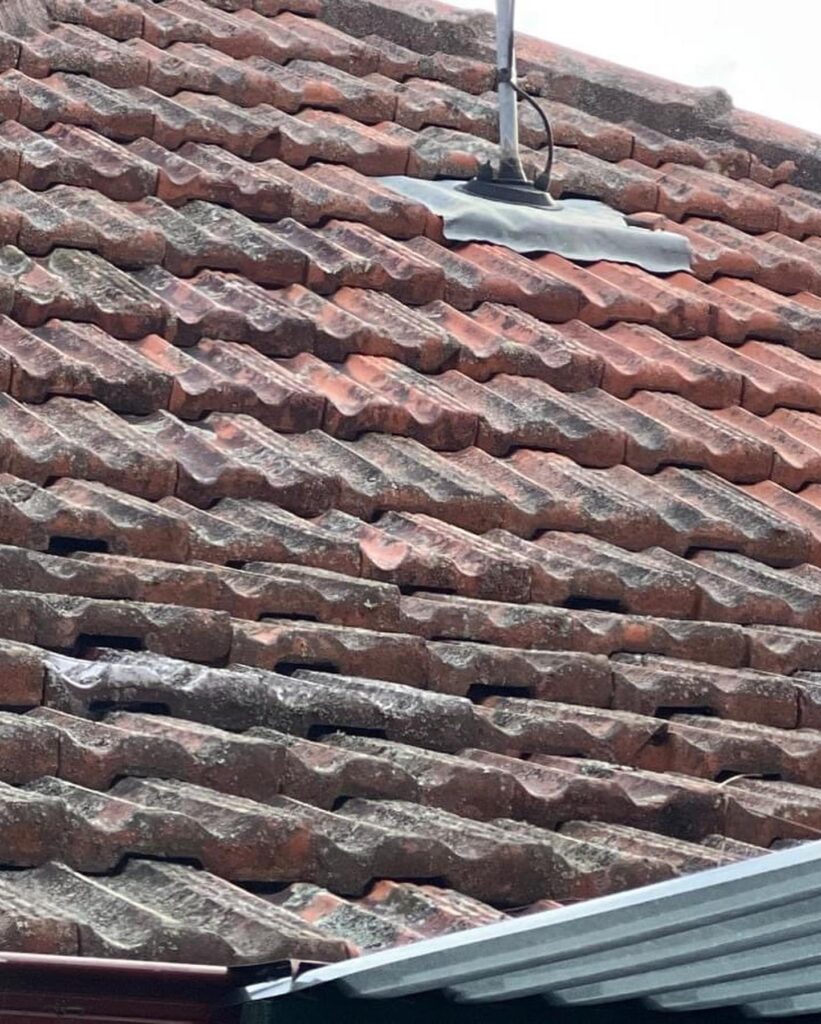
If your gutters are catching more than leaves—say, tiny pebbles, granules, or fine flakes—it’s usually the protective surface layer of your tiles or metal roof breaking down.
This matters because once that coating goes, your roof starts absorbing moisture instead of deflecting it. That means faster degradation, higher heat absorption, and a dramatically shortened lifespan.
Don’t sweep it away and forget about it. It’s not dirt. It’s your roof shedding.
Birds Nesting in Roof Valleys or Gaps
Birds aren’t the problem—what their presence means is. If birds are nesting in your roof valleys, gutters, or beneath sheeting, it’s a clear sign that there are structural gaps or moisture-prone areas they find appealing.
Their nests trap debris, block drainage, and in some cases, dislodge tiles or corrode seams. Left alone, they’ll turn a minor weakness into a guaranteed leak come storm season.
This is one of the least discussed signs—and one of the most preventable with a timely restoration.
Critical Red Flags (Do Not Delay Restoration)
Sagging Rooflines or Bowing Between Trusses
If your roofline looks like it’s dipping—especially in the middle spans or along gutters—you’re likely looking at more than surface wear. This usually signals structural stress beneath: rotting battens, waterlogged framing, or long-term moisture ingress.
📖 People also read about:
It’s the kind of damage that creeps in after years of minor issues that were never caught. Restoration isn’t optional at this point—it’s urgent. If left alone, it may mean a full replacement becomes your only option.
Mould in Ceiling Corners (Without Obvious Leaks)
Black spots or mildew in corners of internal ceilings—especially near external walls—often get blamed on poor ventilation. But when it persists, it usually means moisture is entering from above and evaporating before it can stain.
This kind of roof-related mould can linger for months before turning visible, often damaging insulation and timbers in the meantime. It’s subtle, silent, and dangerous to both the home and the people living inside.
No Inspection in the Last 10 Years
If your roof hasn’t been professionally inspected in a decade, you’re relying on luck. Materials degrade gradually, not suddenly. What looks fine from the street might already be compromised.
Sydney’s climate—heat, hail, wind, and salt—accelerates that ageing process, even if you’ve never had a leak. Restoration is most cost-effective before damage becomes obvious.
And that window closes faster than most people think.
Restoration vs Replacement: When It’s Time to Act
Restoration and replacement sound similar, but what they mean for your home and budget is completely different.
A roof restoration involves resealing, repainting, replacing damaged tiles or sheets, fixing bedding and pointing, and restoring waterproofing systems. It’s designed to extend the life of your roof without the cost and disruption of a full replacement.
💡 Need help?
We offer professional roof restoration sydney to help you achieve your goals.
A replacement, on the other hand, strips everything back to the frame and installs an entirely new roofing system. It’s sometimes necessary, but often avoidable if the signs are caught early.
Restoration is ideal when:
- The structural base is still sound
- Damage is surface-level or patchy
- You want to extend the life of an ageing but functional roof
Replacement is the better option when:
- There’s a significant structural compromise
- You’ve experienced repeated leaks despite patch fixes
- You want to completely change roofing material (e.g., tiles to metal)
Most homeowners overestimate the need for a replacement and underestimate what a thorough restoration can achieve. A proper assessment is the only way to know for sure.
How Tomkat Roofing Diagnoses Before It Quotes
Not every roof needs restoring. And not every restoration needs a sales pitch.
At Tomkat Roofing, the first step is always a proper inspection, not just a quick glance from the ladder. We assess material condition, signs of stress, water paths, ventilation, flashing integrity, and more.
What you get:
- A clear, jargon-free breakdown of what we find
- Transparent options, with no pressure to commit
- Honest guidance on whether restoration, repair, or replacement makes the most sense
Our team works across Sydney—from the leafy North Shore to the wind-battered coastlines—and we’ve seen every type of roof condition there is. That experience shows in the advice we give.
If restoration’s worth doing, we’ll tell you. If it’s not, we’ll tell you that too.
Know the Signs. Protect What’s Under Your Roof.
Roof issues rarely shout—they whisper. And if you’ve spotted even one of these signs, your roof may already be overdue for a restoration.
But that doesn’t mean jumping into a major job. It just means it’s time to find out where you stand—with clarity, not guesswork.
Tomkat Roofing offers honest inspections and practical advice, tailored to your roof and your plans.
No pressure. No runaround. Just the information you need to decide what’s next.
- Experienced, local Sydney team
- Fully licensed and insured
- Focused on quality work, not hard sells
Book your inspection today—and give your roof the attention it needs, before it asks for it the hard way.
Frequently Asked Questions
What are the signs my roof needs restoration?
Early signs include isolated staining or fading, paint bubbling under eaves, new sounds during rain, moss between tiles, and loose or moved flashing.
Is restoration different from replacement?
Yes. Restoration renews a sound roof through cleaning, repairs and recoating, while replacement installs a whole new roof when the existing one has failed.
When is the best time to restore a roof?
When early and mid-level signs appear but the structure is still sound. Restoring at that point extends the life of the roof and avoids replacement.
Can restoration fix leaks?
Restoration includes repairs that address many leak sources, such as flashing and pointing. A proper inspection confirms whether restoration will resolve your leaks.
Restore Before It Gets Worse
From fading to flashing issues, we help Sydney homeowners restore their roof at the right time.