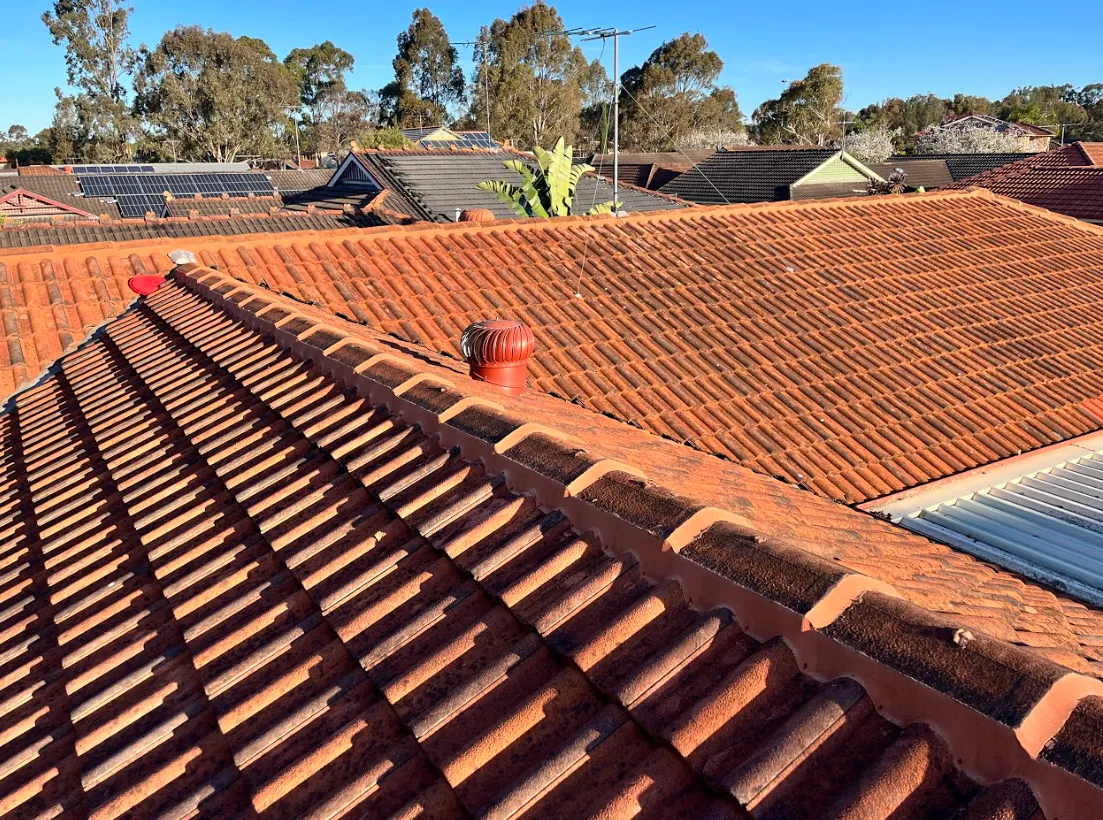
Roof valleys are one of the most vulnerable parts of your roofing system, yet they’re often overlooked until a leak appears. These V-shaped channels, where two roof slopes meet, handle massive water flow during Sydney’s intense storms. When valleys fail, the resulting leaks can cause serious damage to your home’s structure, ceilings, and walls.
If you’ve noticed water stains on your ceiling or suspect your roof valley might be leaking, you’re in the right place. This guide will help you recognise roof valley leaks, spot warning signs, and know when to call in the professionals.
What Are Roof Valleys and Why Do They Leak?
A roof valley is the internal junction where two roof planes intersect, creating a channel that directs rainwater towards your gutters. Because valleys concentrate water from both roof slopes, they’re under constant pressure, particularly during Sydney’s heavy rainfall events.
Several factors contribute to valley leaks:
1. Deteriorated Valley Flashing: Metal flashing degrades over time due to UV exposure, rust, and debris accumulation. Older galvanised valleys are especially prone to rust-through after 20-25 years.
2. Poor Installation: Incorrectly installed valleys with insufficient width, improper pitch, or poorly sealed joints are destined to fail prematurely.
3. Debris Build-up: Leaves, bark, and twigs accumulate in valleys, creating dams that back up water and accelerate metal corrosion.
📖 People also read about:
4. Storm Damage: Falling branches, severe weather, and hail can puncture or dislodge valley flashing, creating immediate leak paths.
Warning Signs Your Roof Valley Needs Attention
Catching valley problems early can save you thousands in repair costs. Here’s what to look for:
Exterior Warning Signs
✔ Rust spots or visible holes in metal flashing
✔ Gaps between flashing and roofing materials
✔ Sagging or buckled valley sections
✔ Excessive debris accumulation
✔ Loose or displaced valley sections
✔ Moss or vegetation growth in the valley
Interior Warning Signs
✔ Water stains on ceilings near valley lines
✔ Damp or wet insulation in your roof cavity
✔ Active dripping during or after rainfall
✔ Musty odours indicating moisture problems
✔ Mould growth on ceilings or walls
✔ Peeling paint or damaged plasterboard
Don’t ignore these warning signs. Valley leaks concentrate water in specific areas, causing rapid structural damage that worsens with every storm.

Repair Methods for Roof Valley Leaks
The right repair approach depends on how badly your valley is damaged. Here are the three main options:
1. Minor Repairs (Patch and Seal)
For small holes, cracks, or joint failures in otherwise sound flashing, a patch and seal repair might do the job. This involves cleaning the affected area thoroughly, applying metal primer, and using high-quality roof sealant or flashing tape. While this is a cost-effective temporary solution, patching typically extends valley life by only 2-5 years.
2. Valley Re-lining
When the valley structure remains sound but the flashing is failing, re-lining works well. This process involves removing tiles along the valley edges, inspecting the underlayment, and installing new flashing over the existing structure. All joints are sealed properly, and roofing materials are reinstalled with correct clearances. Valley re-lining typically costs between $180-$280 per linear metre.
3. Complete Valley Replacement
Severely deteriorated valleys need complete replacement. This thorough approach includes removing all roofing materials from the valley area, stripping out old flashing, inspecting and repairing roof framing, installing new waterproof sarking, and fitting new valley flashing with proper fall and width. While more expensive at $220-$350 per linear metre, complete replacement gives you lasting protection and peace of mind.
📖 People also read about:
——————
Preventing Future Valley Leaks
Prevention is always better than cure when it comes to roof valleys. Here’s how to protect your investment:
1. Regular Cleaning: Clear valleys at least twice yearly, particularly in autumn and spring. Remove leaves, debris, and anything that could create water dams.
2. Annual Inspections: Schedule professional roof inspections to catch small issues before they become expensive problems. Pay special attention to valleys over 15 years old.
3. Trim Overhanging Trees: Reduce debris accumulation and prevent branch damage by keeping trees well-trimmed.
💡 Need help?
We offer professional storm damage roof repair sydney to help you achieve your goals.
4. Act Fast on Small Issues: Don’t wait for ceiling stains to appear. Small leaks quickly become major structural problems in Sydney’s wet climate.
When to Call a Professional
Roof valley work isn’t suitable for DIY repairs. Valley repairs involve complex waterproofing, working at dangerous heights, and ensuring compliance with Australian building codes. Even small mistakes can lead to catastrophic leaks and void your insurance coverage.
At Tomkat Roofing, our licensed team has extensive experience diagnosing and repairing valley leaks across Sydney. We give you transparent fixed-price quotes, quality workmanship, and warranties you can trust. Most valley repairs are completed within 1-2 days, with minimal disruption to your daily routine.

Protect Your Sydney Home Today
Roof valley leaks won’t fix themselves, and delaying repairs only increases the damage and cost. If you’ve noticed any warning signs or haven’t had your roof inspected recently, now’s the time to act.
Contact Tomkat Roofing for a free, no-obligation roof inspection and quote. Our experienced team will assess your valley condition, explain your options clearly, and give you reliable solutions designed for Sydney’s climate. Don’t wait for the next storm to discover you have a problem.